
Our Catchment
The River Pang is a chalk stream in West Berkshire and a tributary of the River Thames
The River Pang rises near the village of Compton and flows for approximately 36 km to its confluence with the Thames at Pangbourne. The Pang is ephemeral upstream of the Blue Pool, near Stanford Dingley, approximately 10 km from the confluence with the River Thames. It has a few smaller tributaries, including the River Bourne which joins around 5 km upstream of Pangbourne.
The Sulham Brook is a short tributary of the River Thames. It runs for approximately 6 km from its source just north of Theale, before flowing through Sulham and into the Thames to the east of Pangbourne by Saltney Mead. The upper reaches of the Sulham Brook are fed by Chalk and some contributions from gravels. For much of its course, it runs parallel to the River Pang with often less than 1 km separating the two streams. The course is flat and prone to winter flooding and summer drying.
River Catchment Status
Under the Water Framework Directive (WFD) rivers are monitored by the Environment Agency to determine the condition of rivers, transitional and groundwater bodies. The Environment Agency classify rivers from ‘High’ to ‘Bad’ status.
Each water body status is built up from assessments of a number of different ecological, morphological and chemical parameters. The ecological parameters drive the overall status directly. Other parameters are classified as ‘supporting’ and limit the overall status to Moderate, these include morphology, hydrology and water quality. It should be noted that the EA do not complete assessments for all elements in every classification; these elements are listed as ‘do not require assessment’. There are two Water Framework Directive water bodies covering the Pang Flagship area: the Pang and the Sulham Brook water bodies. The Pang is currently classified as poor status and the Sulham Brook is classified as moderate status (2022).
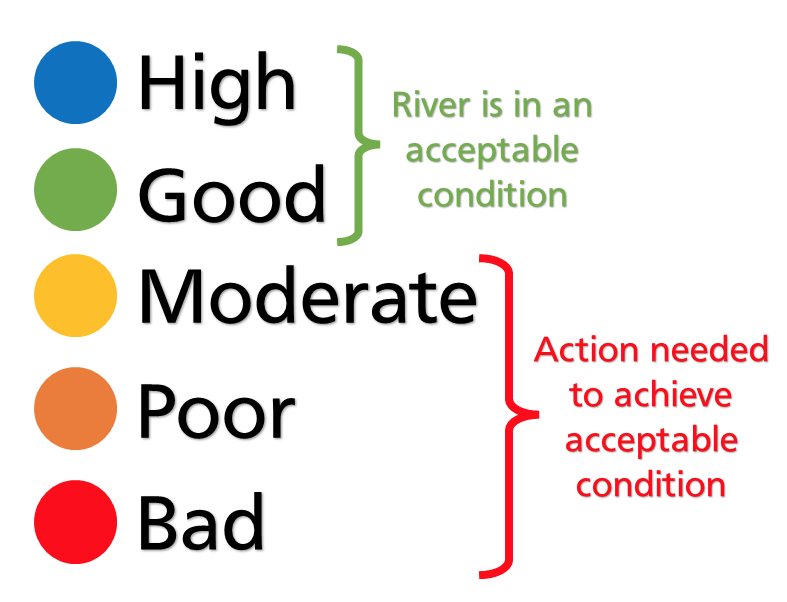
Water Framework Directive Classification (WFD)
The Challenges
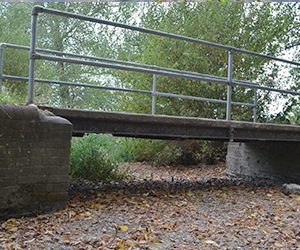
Low flows and water abstraction
The Pang relies on groundwater from the chalk aquifer. Over-abstraction for public water supply and agriculture can reduce spring flows, particularly during dry periods. Low flows not only harm aquatic habitats but also concentrate pollutants and raise water temperatures, making life difficult for sensitive chalk stream species like brown trout, mayfly and stream water crowfoot.
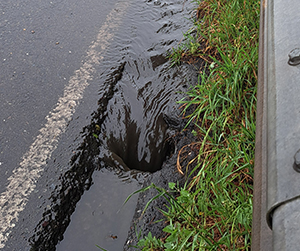
Pollution and water quality
Runoff from roads, septic tanks, and farmland introduces nutrients, silt, and chemicals into the river. Elevated levels of phosphorus and sediment can smother gravels, reduce oxygen levels, and trigger algal growth, damaging the natural ecology of the stream. Addressing diffuse pollution remains one of the biggest challenges for improving the Pang’s water quality.
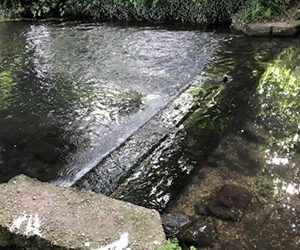
Physical modifications
Historic land drainage, mill structures, and channel straightening have altered the Pang’s natural form and flow. These changes disconnect the river from its floodplain, reduce habitat diversity, and limit the river’s ability to recover from floods or droughts. Restoring more natural features — such as meanders, woody debris, and wetland fringes — is key to building a healthier, more resilient river.
Climate change
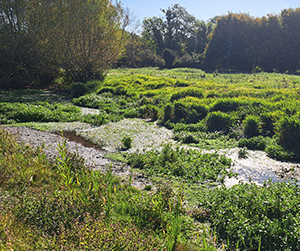
Hotter, drier summers and more intense rainfall events are already affecting chalk stream systems. Reduced recharge of the aquifer in winter and increased pressure on water resources during summer create further strain on the Pang’s flow and ecology. Nature-based solutions and sustainable water use will be essential to help the river adapt to a changing climate.
Invasive non-native species
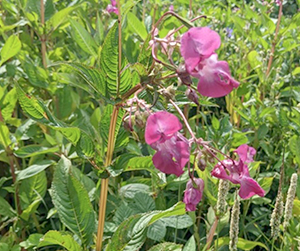
Species such as Himalayan balsam and signal crayfish are spreading through parts of the catchment, outcompeting native plants and animals and altering the river’s natural balance. Coordinated monitoring and community action are vital to prevent further spread and to restore native biodiversity.